
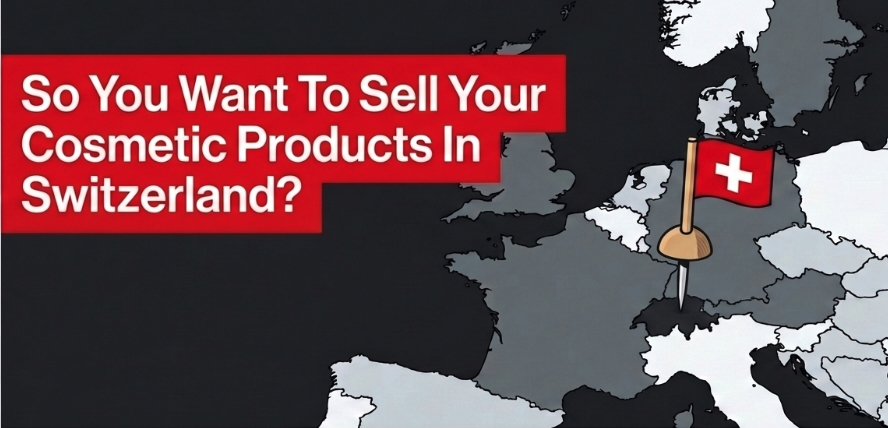
Switzerland is a landlocked country centrally located in Europe and surrounded by EU member states like Germany, France, Italy, and Austria. Despite its location, Switzerland is not a member of the European Union or the European Economic Area (EEA), which means the EU Cosmetics Regulation does not directly apply there. However, Switzerland generally follows EU norms closely, and its regulatory framework is highly compatible with the EU, with specific agreements in place to facilitate smooth commerce between the two territories.
If you are looking to expand your cosmetic brand into the Swiss market, here is how the regulatory landscape will impact your business.
Can I Use My Existing PIF?
Yes, your existing EU Product Information File (PIF) is extremely valuable and can be used. If your cosmetic product is already on the market abroad, your Swiss importer or manufacturer must be able to provide proof that a PIF has been established and is compliant with Swiss regulations.
You do not need to present the PIF to Swiss authorities for prior approval. However, because the Swiss cantonal enforcement authorities do not have access to the European Cosmetic Products Notification Portal (CPNP), they cannot verify your product automatically. To ensure that the legality of your product can be checked, you must submit the necessary data according to EU regulations, such as evidence that the PIF has been compiled and your EU notification number.
Do I Need a Swiss RP?
Yes, you do. While Swiss regulations allow you to keep the name and address of your EU Responsible Person (RP) on your product packaging, the ultimate responsibility for ensuring compliance with Swiss regulations rests with the manufacturer or importer located in Switzerland. This legal obligation cannot be transferred abroad to your EU RP or anyone else.
In Switzerland, the term “Responsible Person” refers to the contact point for surveillance authorities. If no specific individual holds this role, the company CEO automatically takes on the responsibility as the contact point for regulatory surveillance purposes. The Swiss Responsible Person is required to hold and maintain an up-to-date self-monitoring dossier to present during cantonal inspections.
Do I Need Swiss Approval or Registration?
No prior authorization or registration is required to sell cosmetics in Switzerland. As long as your cosmetic products meet the legal requirements, you do not need approval from cantonal authorities or the Federal Office for Food Safety and Veterinary Affairs (OSAV) before placing them on the market. There is also no requirement for a notification form or a free sale certificate.
Instead of a pre-market approval system, Switzerland operates heavily on an obligation to self-monitoring. This means the manufacturer, distributor, or importer must ensure their products comply with legal requirements and must maintain the aforementioned self-monitoring dossier. While formal registration is not needed, it is strongly advised that you announce your business activity to the Consumer Affairs and Veterinary Affairs Department (SCAV) when starting your activity, making significant changes, changing the responsible person, or ceasing operations.
Cosmetic Packs In Switzerland
You must also ensure your packaging meets specific Swiss labeling requirements before going to market. Most importantly, warnings and instructions must be translated into at least one of the official Swiss languages, which are French, German, or Italian.
Also bear in mind that the rules on claims are a bit tighter especially on efficacy claims – so don’t assume that what is acceptable in the EU and UK will automatically be okay in Switzerland.
What About VAT and VOC?
When bringing your cosmetic products into Switzerland, they will be duty-free, but they are subject to a Value Added Tax (VAT) of 8.1 percent, as of January 2024.
You must also consider the Volatile Organic Compounds (VOC) Incentive Tax, which is a unique element of Swiss law designed to encourage the careful use of products containing VOCs due to their potential environmental harm. VOCs are frequently found in cosmetics, operating as solvents in various products or as propellants in aerosol cans. If your cosmetic product contains at least 3 percent of these volatile organic compounds, it will be subject to a tax of 3 Swiss francs per kilogram of VOC.